Can You Get STDs from Shared Drinks or Utensils?
The short answer is reassuring for most infections, with two exceptions worth understanding. This guide walks through which STIs can and cannot spread through shared dinnerware, what is happening biologically, and the simple hygiene that handles the small residual risks.
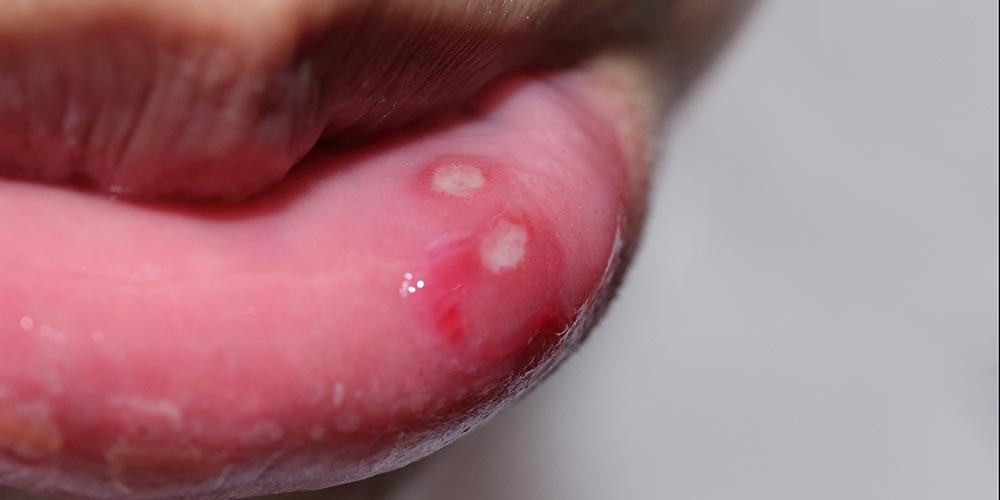



- Most STIs (HIV, chlamydia, gonorrhea, syphilis, HPV, trichomoniasis) cannot be transmitted by sharing a drink or eating utensil. The pathogens do not survive long enough on surfaces, and the digestive tract is not a vulnerable infection site for them.
- Two viruses warrant more care. HSV-1 can pass through direct contact with an active cold sore, and shared items used during an outbreak are a small but real route. Hepatitis B can be detected in saliva but transmission through shared cups or utensils is uncommon; vaccination eliminates most of the worry.
Published: October 2025 | Last updated: May 2026 | Editorial review and quality control: Martina N.
You share a glass with a friend at a restaurant. Later you wonder, can a sexually transmitted infection actually spread that way? For most STIs, the answer is reassuring. Pathogens like HIV, chlamydia, gonorrhea, syphilis, HPV, and trichomoniasis do not survive long enough on a glass or a fork to infect the next person who picks it up. Public-health agencies treat shared drinkware and cutlery as a non-route for these infections.
Two viruses deserve more nuance. Oral herpes (HSV-1) can spread through direct contact with an active cold sore or with saliva, and shared utensils used during an outbreak are one of the documented ways the virus moves around at home. Hepatitis B is less straightforward; the virus is present in saliva at very low levels, but real-world transmission through shared cups or eating utensils is considered uncommon. The vaccine, where someone has had it, removes most of that worry.
This article walks through what is happening biologically, where the genuine risks sit, and the hygiene that meaningfully reduces them.
How STIs Actually Move Between People
Sexually transmitted infections are a broad mix of bacteria, viruses, and parasites. The list ranges from chlamydia and gonorrhea (bacteria) to HIV, hepatitis B, HSV-1, HSV-2, and HPV (viruses) to trichomoniasis (a single-celled parasite). What unites them is not how they look biologically; it is how they move between people.
Three transmission routes do almost all the work:
- Direct mucous-membrane contact during sexual activity (vaginal, anal, or oral)
- Blood-to-blood contact, mainly through shared needles, occupational sharps exposures, or unscreened blood products
- Mother-to-child during pregnancy, delivery, or (for some infections) breastfeeding
Each of these routes has something in common. The pathogen reaches the next person while still alive, and it lands on a tissue surface it can actually infect. Vaginal, rectal, urethral, and oral mucous membranes are the body's vulnerable doorways. Intact skin and the inside of the digestive tract are much harder for these organisms to cross.
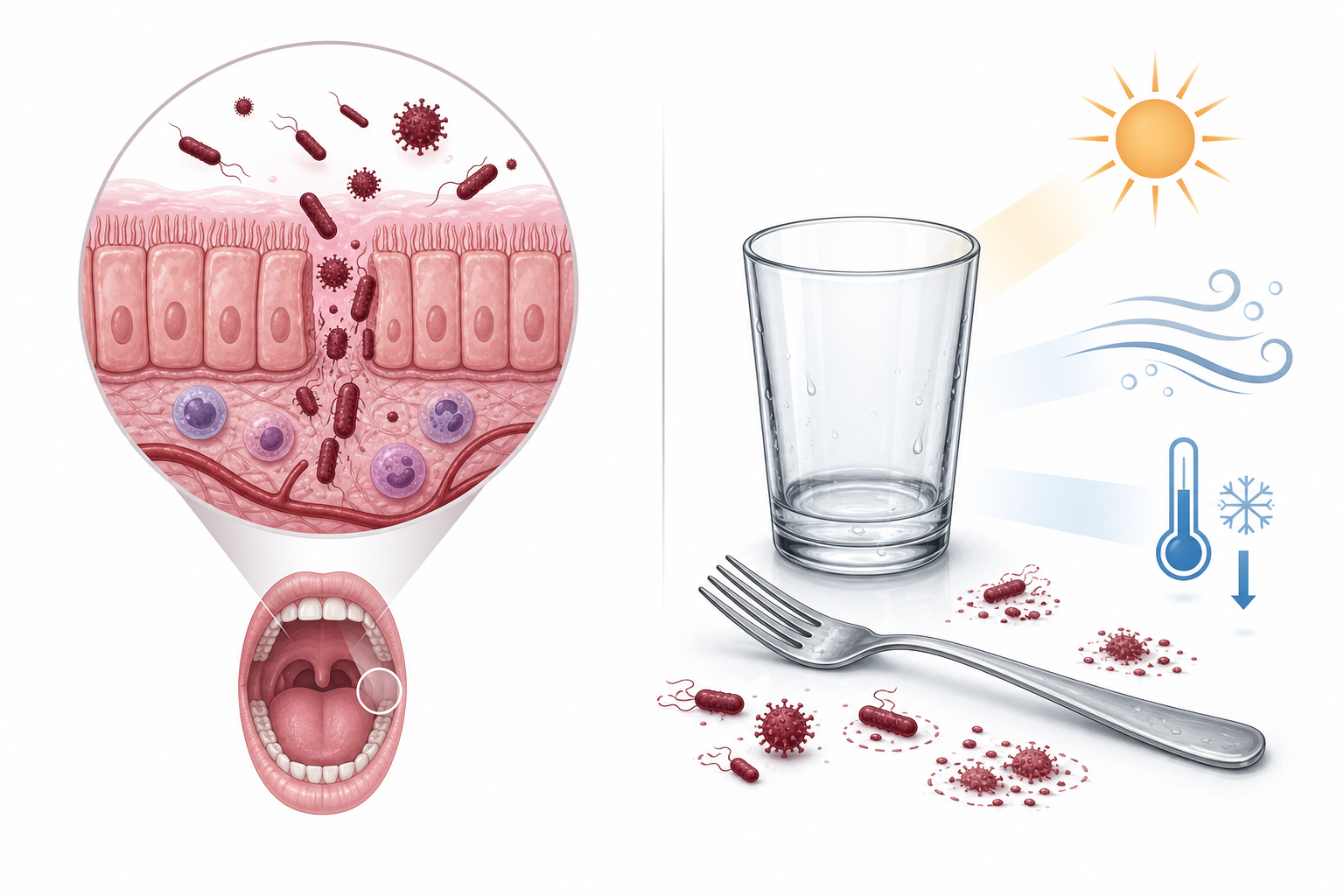
A shared cup does not provide either condition reliably. Saliva on the rim is exposed to air for minutes before the next sip; that alone kills most of the organisms above. Even if a small number survive, they end up swallowed, where stomach acid and digestive enzymes finish them off. Without a wound, an active lesion, or another mucous-membrane breach, there is nowhere for the pathogen to set up an infection.
The U.S. Centers for Disease Control and Prevention and the World Health Organization classify shared eating and drinking utensils as a casual-contact route. Casual contact is the same category that includes hugging, sharing a toilet seat, and using a swimming pool. For HIV, chlamydia, gonorrhea, syphilis, HPV, and trichomoniasis, the documented risk in this category is essentially zero.
HIV is not spread by tears, sweat, saliva, sneezing, coughing, sharing eating utensils, drinking glasses, sharing toilets, swimming pools, or insect bites. HIV is found mainly in blood, semen, vaginal fluid, and rectal fluid.
Why Most Pathogens Die Quickly on a Glass
To understand why shared utensils are a non-route for most STIs, it helps to look at what is happening on the glass itself.
The moment a pathogen leaves the human body, it meets three threats:
- Dehydration. Most STI organisms need warm, wet conditions to stay viable. A glass rim or a fork tine dries out within minutes.
- Oxygen exposure. Several STI bacteria, particularly Treponema pallidum (syphilis) and Neisseria gonorrhoeae (gonorrhea), are sensitive to air. They require the moist, oxygen-limited environment of mucous membranes to survive.
- Temperature change. Body temperature is around 37 degrees Celsius. The surface of a glass on a table cools toward room temperature within minutes, slowing or stopping replication.
For HIV in particular, the CDC has stated that the virus does not survive long outside the body and is not transmitted through casual contact, including sharing eating utensils, glasses, or surfaces. Outside the body, HIV concentrations drop quickly; the small amount that might transfer to a glass is no longer infectious by the time anyone else drinks from it.
Chlamydia and gonorrhea behave similarly. These bacteria are obligate parasites of human mucous membranes. They cannot replicate in saliva, on glass, or in the digestive tract. The infections they cause require the bacteria to attach to specific cell types in the urethra, cervix, rectum, or throat, and the dose required to establish infection is significantly larger than trace amounts of saliva on a cup could carry.
Trichomoniasis is even more environment-sensitive. The parasite (Trichomonas vaginalis) is fragile outside the genital tract; it does not survive drying. Sharing a drink does not transmit it. The same applies to bacterial vaginosis and yeast overgrowth, which are not technically STIs but often get lumped into the same question.
HPV is a skin-and-mucous-membrane virus transmitted by direct contact, not by saliva exchange. HPV DNA can be detected in saliva in some studies, but DNA presence is not the same as live, infectious virus, and shared cups have not been implicated in real-world transmission. Oral HPV, which is the form associated with oropharyngeal cancers, is linked to oral sex, not to sharing dinnerware.
The Real Exception, Oral Herpes (HSV-1)
Oral herpes (HSV-1) is the one infection where the shared-utensils worry has a kernel of truth, and it is worth unpacking carefully.
HSV-1 is extraordinarily common. The WHO estimates that about two-thirds of the global population under age 50 carries HSV-1, which translates to roughly 3.8 billion people worldwide. Most people acquire it in childhood, not through sexual contact, and many have never had a noticeable outbreak.
The virus can spread in three main ways:
- Direct skin or mucous-membrane contact with an active sore (a cold sore on the lip is the classic example)
- Saliva contact, particularly during an active outbreak or in the hours before a lesion appears
- Asymptomatic shedding, where the virus is present in saliva even when no sore is visible
Within this framework, shared cups and utensils become a plausible (though minor) route, and only under specific conditions. If someone drinks from a glass in the hours before a cold sore appears (the tingling stage, sometimes called the prodromal phase) or while an active sore is shedding, and the next person uses the glass shortly afterward, transfer is biologically possible. HSV-1 does not survive long on inanimate surfaces; laboratory studies put viability on dry surfaces in the range of minutes to a couple of hours, with shorter survival in cooler, drier air.
For adults who already carry HSV-1 (about two-thirds of the population), this changes very little. Re-exposure at the same anatomic site is not a meaningful concern. For HSV-1 negative adults, the practical guidance is:
- During someone's active cold sore, avoid sharing drinkware, lip balm, eating utensils, and direct mouth contact (including kissing).
- The shortly-after window matters. Once a cup has been washed with hot water and detergent, or has fully dried for a few hours, transmission risk drops sharply.
- Asymptomatic shedding is the harder-to-control route. Most adult acquisitions happen through kissing partners who had no visible outbreak at the time, not through shared dinnerware.
A first HSV-1 outbreak typically begins with a tingling or burning sensation on the lip, with blisters appearing over the next 48 hours, according to the NHS guidance on cold sores. Small red bumps turn into fluid-filled vesicles, then ulcers, then crusts that heal over 7 to 10 days. First outbreaks are usually the most severe; recurrences (when they happen) tend to be shorter and milder. Common triggers include illness, stress, sun exposure, fatigue, hormonal changes, and trauma to the area.
There is no cure for HSV-1, but antiviral medications (acyclovir, valacyclovir, famciclovir) shorten outbreaks and reduce shedding. For people with frequent recurrences, daily suppressive therapy is an option worth discussing with a clinician.
If you have had a known cold-sore exposure and have never been tested, a blood antibody test can clarify whether you already carry HSV-1, HSV-2, or both. The window from exposure to a reliable positive antibody result is typically 12 weeks, with reliability continuing to improve out to about 16 weeks.
This article is published by stdrapidtestkits.com, which sells the rapid at-home test kits referenced below. We recommend products based on fit for the reader's specific testing concern, not commercial benefit.
What About Hepatitis B? Setting the Record Straight
Earlier versions of this article suggested hepatitis B could spread through shared drinks and utensils. That framing is more alarmist than the evidence supports, and it is worth correcting.
Hepatitis B virus (HBV) is one of the most efficiently transmitted blood-borne viruses. The CDC and the WHO consistently list the dominant transmission routes as:
- Sexual contact with an infected partner
- Sharing needles, syringes, or drug-injection equipment
- Mother-to-child at birth
- Occupational needlestick or sharps exposure
- Direct contact with infected blood or open sores
HBV has been detected in saliva, but at much lower concentrations than in blood, and saliva-only transmission is considered uncommon in real-world conditions. The CDC states explicitly that HBV is not spread through food or water, sharing eating utensils, breastfeeding, hugging, kissing, hand holding, coughing, or sneezing.
Where the sharing-items concern is real is with items that can transfer blood, not saliva:
- Toothbrushes can carry trace amounts of blood from gum bleeding.
- Razors can carry blood from small nicks.
- Manicure and pedicure tools, nail clippers, and tattoo or piercing equipment that has not been properly sterilized.
For these items, the recommendation is straightforward; do not share them. The same logic applies to other blood-borne viruses (hepatitis C, HIV) where the risk profile is similar.
The single biggest preventive tool against hepatitis B is the vaccine. The HBV vaccine series provides 90 percent or greater protection in most healthy adults who complete the schedule, and it has been part of routine infant immunization in the United States and most other countries for decades. If you are unsure of your vaccination status, a serology test (HBsAg, anti-HBs, anti-HBc) can clarify both whether you have ever been infected and whether you are immune.
One important distinction: hepatitis A is a separate virus that does spread through contaminated food and water and unsanitary food handling. Hepatitis A is not classified as an STI in most public-health discussions, though oral-anal sexual contact can transmit it. Travelers to areas with limited sanitation and people with specific risk factors are routinely offered hepatitis A vaccination.
The STIs That Definitely Do Not Spread This Way
Beyond the headline worries, a few specific infections come up often enough to be worth addressing directly.
HIV. HIV is not transmitted through saliva, tears, sweat, or casual contact. The virus cannot survive long outside the body, and the concentration in saliva is far too low to be infectious even if it could. Sharing a drink with someone who is HIV positive carries no measurable risk. The transmission routes that matter are vaginal and anal sex, shared needles, mother-to-child, and (much less commonly) occupational needlestick exposures.
Chlamydia. A bacterial infection requiring direct mucous-membrane contact, usually genital, anal, or oral during sexual activity. The bacteria do not survive outside the body, and they cannot be picked up from a drinking glass.
Gonorrhea. The same principle applies. While gonorrhea can infect the throat through oral sex, the dose and direct mucous-membrane contact required are not present in casual food sharing. Eating off the same fork as someone with pharyngeal gonorrhea is not a documented route.
Syphilis. The bacterium that causes syphilis (Treponema pallidum) requires direct contact with a chancre or syphilitic rash. It dies quickly outside the body. Sharing a glass does not transmit syphilis.
Trichomoniasis. The parasite (Trichomonas vaginalis) cannot survive outside the genital tract. It is not transmitted through shared drinks, utensils, towels, or toilet seats.
HPV. Human papillomavirus spreads through direct skin-to-skin or mucous-membrane contact. Oral HPV is associated with oral sex, not with shared dinnerware. Some studies have found HPV DNA in saliva, but that does not make shared cups a real-world transmission route.
HSV-2 (genital herpes). HSV-2 is genital. Although it can in rare cases infect the mouth, the typical transmission is genital-to-genital or genital-to-mouth contact. Shared drinking glasses are not a documented route.
| Infection | Why drinkware is not a route |
|---|---|
| HIV | Virus does not survive outside the body; saliva concentration is far too low to infect |
| Chlamydia | Bacterium requires direct mucous-membrane attachment; cannot replicate on glass or in the gut |
| Gonorrhea | Throat infection is acquired through oral sex; casual food sharing does not deliver the required dose |
| Syphilis | Treponema pallidum dies quickly in air; needs direct contact with a chancre or rash |
| Trichomoniasis | Parasite cannot survive drying or temperature drop outside the genital tract |
| HPV | Spreads by direct skin or mucous-membrane contact; DNA in saliva is not infectious virus |
| HSV-2 | A genital virus; not transmitted via oral or drinkware routes in real-world conditions |
When Shared Items Genuinely Matter
For completeness, here are the household items where sharing does carry real risk, separated by the kind of pathogen involved.
Items that can carry blood (HBV, HCV, HIV concern):
- Razors and disposable shaving equipment
- Toothbrushes (small amounts of blood from gum bleeding)
- Manicure and pedicure tools
- Tattoo and piercing equipment
- Glucose-monitoring lancets and other sharps
These items can carry trace blood with viable virus. HBV is particularly durable on surfaces compared with HIV, which is one reason vaccination and not sharing personal-care items are both emphasized.
Items that can carry HSV-1 during an outbreak:
- Drinking glasses, cups, water bottles
- Eating utensils (forks, spoons, straws)
- Lip balm, lipstick, lip-care products
- Towels used on or near the mouth
- Razors used near the mouth
The key qualifier is during an outbreak. Outside of active or recently active lesions, the residual risk on these items drops significantly. Standard dishwashing with hot water and detergent reliably eliminates the virus.
Items that are not a concern, despite common worry:
- Toilet seats
- Doorknobs and shared touch surfaces
- Pool water or hot tubs
- Shared exercise equipment (with a clean towel)
- Drinking glasses in a typical adult household without an active HSV outbreak
Blood-carrying items (razors, toothbrushes, lancets) and HSV-1 items during an active outbreak (cups, utensils, lip balm) involve different pathogens and different precautions. Group them in your head separately and the right hygiene becomes obvious; treat them as one undifferentiated worry and the standard advice can feel arbitrary.
Practical Hygiene That Reduces Risk
Several simple practices meaningfully reduce the small residual risks discussed in this article.
Wash dishes with hot water and detergent. Standard dishwashing reliably eliminates HSV-1 on cups and utensils. Dishwasher cycles with heated drying are even more effective.
Do not share toothbrushes or razors. Each household member should have their own. This protects against HBV, HCV, and HIV in the rare scenarios where small blood transfers matter, and it is also good general hygiene against routine oral bacteria.
During a cold sore outbreak, isolate certain items. Use a separate cup, eating utensil, and lip balm until the sore has crusted over and healed. Avoid direct mouth contact (kissing, oral sex) during this window. Newborns are a special case; HSV-1 in the first weeks of life can be serious, so avoid direct face contact with infants during an active outbreak.
Vaccinate. The HBV vaccine is the single most effective intervention against hepatitis B. The HPV vaccine is routinely recommended through age 26 and considered case by case through age 45. The HAV vaccine is recommended for specific risk groups and most travelers to regions with limited sanitation.
Get tested after a known exposure. If you have had sexual contact with a partner whose status you do not know, antibody and antigen tests are available for HIV, syphilis, hepatitis B, hepatitis C, HSV-1, and HSV-2 through fingerstick blood samples. Swab-based tests cover chlamydia, gonorrhea, trichomoniasis, and HPV. The window from exposure to a reliable result varies by infection, from about 14 days for chlamydia and gonorrhea to 12 to 16 weeks for HSV antibodies.
Check your HBV vaccination status. The hepatitis B vaccine is one of the most effective vaccines ever produced and covers the only one of these viruses where a small additional household-sharing risk genuinely exists. A short serology test can tell you whether you are already immune.
Frequently Asked Questions
- Can I get HIV from drinking from the same cup as someone who is HIV positive?
- No. HIV does not survive long outside the body, and the virus is not transmitted through saliva. The CDC classifies sharing drinking glasses as casual contact with no documented HIV transmission. The transmission routes that matter for HIV are vaginal and anal sex, shared needles, mother-to-child transmission, and occupational sharps exposures.
- If someone with a cold sore drinks from my cup, will I catch herpes?
- Possibly, if the contact happens during the active outbreak and you use the cup shortly after without washing it. The risk drops sharply once the cup has been washed with hot water and detergent or has fully dried for a few hours. If the person is between outbreaks, asymptomatic shedding makes the risk low but not zero; most adult HSV-1 acquisitions still come from kissing rather than from shared dinnerware.
- Can hepatitis B spread from sharing forks or chopsticks?
- The CDC explicitly states that hepatitis B is not spread through sharing eating utensils. HBV is present in saliva at low levels but real-world transmission through shared cups or utensils is uncommon. The genuine sharing concern with HBV is blood: toothbrushes, razors, and shared injection equipment are the items to keep personal.
- Does saliva neutralize STI pathogens?
- Saliva contains enzymes and antibodies that inhibit many pathogens, and stomach acid kills most of what reaches the digestive tract. Together they are effective against the great majority of STI organisms. HSV-1 is the main exception; the virus can survive briefly in saliva long enough to spread through direct contact during an outbreak.
- Can I get gonorrhea or chlamydia from sharing a drink?
- No. Both are mucous-membrane bacteria that do not survive on surfaces and cannot establish infection through the digestive tract. Sexual contact (genital, anal, or oral) is the only documented route. Pharyngeal gonorrhea, where the throat carries the infection, is acquired through oral sex, not through eating off the same fork.
- What about kissing someone with a cold sore?
- Kissing during an active cold sore is the most efficient way to transfer HSV-1 between two people, more so than shared utensils, because of direct mucous-membrane contact. If the person is between outbreaks, asymptomatic shedding still poses some risk, but it is much lower. Avoiding direct mouth contact during a visible outbreak is the simplest precaution.
- Should I avoid sharing food with my kids if I have HSV-1?
- Most adults already carry HSV-1, often without ever having had a visible outbreak. The standard guidance is to avoid direct contact (kissing, sharing utensils, sharing lip balm) during your active outbreaks. Outside of outbreaks, normal household sharing is fine. Newborns are an exception; HSV-1 in the first weeks of life can be serious, and avoiding direct face contact during an active outbreak is important.
- When should I get tested if I am worried about an exposure?
- Window periods vary by infection. Chlamydia and gonorrhea swab tests are reliable from about day 14. HIV fourth-generation antigen-antibody tests detect infection from about 18 to 45 days; rapid antibody tests need closer to 90 days for full reliability. HSV-1 and HSV-2 antibody tests are typically reliable at 12 to 16 weeks. HBV and HCV antibody tests are reliable from about 6 to 12 weeks after exposure.
- U.S. Centers for Disease Control and Prevention. HIV transmission routes and casual-contact guidance, including the explicit statement that HIV is not spread through saliva, sharing utensils, or drinking glasses.
- World Health Organization. Herpes simplex virus fact sheet, cited for the global HSV-1 prevalence figure (about 3.8 billion people under age 50, or roughly two-thirds of that population) and for the description of HSV-1 transmission routes.
- U.S. Centers for Disease Control and Prevention. Hepatitis B transmission routes and the explicit statement that HBV is not spread through food, water, sharing eating utensils, breastfeeding, hugging, kissing, or sneezing.
- World Health Organization. Hepatitis B fact sheet, cited for the global burden, primary transmission routes, and vaccination recommendation.
- UK National Health Service. Cold sores overview, cited for typical HSV-1 outbreak symptoms (tingling followed by blisters over 48 hours), duration, and home-care recommendations.
- UK National Health Service. Hepatitis B overview, cited as a supporting source for HBV transmission routes, symptoms, and clinical course.
- World Health Organization. Sexually transmitted infections fact sheet, cited for the global picture of STI transmission routes and for the casual-contact classification.
- U.S. Centers for Disease Control and Prevention. Sexually transmitted infections (STI) treatment and prevention guidance hub, cited for HPV transmission, syphilis transmission, and general STI prevention framing.